GSA SER Tier 1 Link Building
Understanding the Strategic Value of GSA SER Tier 1 Link Building
In the ever-evolving world of search engine optimization, link building remains one of the most critical factors for ranking success. However, the way links are structured matters just as much as the links themselves. One approach that has consistently proven effective for experienced SEOs is the tiered link building methodology, particularly when GSA Search Engine Ranker is deployed for constructing a powerful second layer. The concept of GSA SER tier 1 link building has become a focal point for those who understand that the quality of the links pointing directly to a money site can make or break a campaign. This strategy is not about spamming; it is about creating a carefully engineered system where top-tier contextual links are reinforced by an automated, high-volume infrastructure beneath them.
What Defines a Tier 1 Link in the GSA Ecosystem?
Before diving into the automation aspect, it is crucial to define what a tier 1 link actually represents. In a multi-tiered setup, Tier 1 consists of the backlinks that point directly to your website—the money site. These are the properties that search engines will scrutinize most closely. For a GSA SER tier 1 link building workflow, these are not the spammy blog comments or forum profiles that GSA can produce en masse. Instead, the automated tool is strategically positioned in a supporting role. The Tier 1 links are manually created, high-quality assets: guest posts on real blogs, niche edits, curated resource pages, and genuine contributor articles. They are written with natural language, offer real value to a reader, and carry the contextual relevance that Google’s algorithms prioritize.
GSA SER takes center stage in Tier 2 and Tier 3. The philosophy is to flood those high-quality Tier 1 pages with thousands of automated links. This indirect approach passes power upward without exposing your main site to low-quality signals. The Tier 1 properties act as a buffer, absorbing the algorithmic risk while passing along juice from the sheer volume generated by GSA. The result is a safer, scalable way to build link authority without jeopardizing your core domain.
The Role of Quality Control in Automated Tier 1 Campaigns
Some practitioners make the mistake of using GSA SER directly to build Tier 1 links. This is where the distinction between “tier 1 links for GSA†and “GSA SER tier 1 link building†becomes blurred. In a properly engineered system, the phrase refers to the process of preparing and fortifying the links that GSA will later support, not the raw automation of those top-tier placements. Setting up a successful campaign demands a rigorous filtering process. Even though GSA SER is not crafting the Tier 1 posts, it is fed a curated list of verified target URLs where the high-quality links have been placed. The software’s project settings must be configured to use only high-authority platforms as Tier 2, avoiding anything that could devalue the buffer pages.
This means when you are engaging in GSA SER tier 1 link building, you are investing significant time in verifying the indexation rate and trust metrics of your manually built properties. You then use GSA to power those assets with article directories, Wiki links, social bookmarks, and other fast-moving sources. The configuration of GSA’s link verifier, the use of dedicated proxies, and the careful selection of anchor text ratios for the lower tiers—these all become essential levers. The Tier 1 remains pristine, anchored on branded and naked URL variations, while the lower tiers do the heavy lifting with more aggressive anchor text distribution.
Crafting the Perfect Buffer: Selecting Platforms for Tier 1
The strength of your entire link pyramid rests on the durability of your Tier 1 properties. Not all platforms are created equal. For a robust GSA SER tier 1 link building campaign, the best candidates are those that have strong internal linking structures, allow a reasonable amount of content, and are indexed quickly. Web 2.0 properties like WordPress, Blogger, and Tumblr have long been staples, but modern campaigns are evolving. Medium articles, Notion pages, and even carefully constructed Google Sites have entered the mix. The key is that each Tier 1 asset must be themed, containing at least 500 words of readable, relevant content, complete with images and outbound links to authoritative non-competing sources. This contextual depth signals to search engines that the page is a genuine resource, not a hollow shell built solely for SEO.
Once these manual properties are live, they become the recipients of GSA’s automated campaign. It is common practice to create a separate GSA project for each Tier 1 URL, or to group them by niche. The engine then methodically builds thousands of backlinks to these buffer pages. Because the Tier 1 pages are on large, authoritative domains, they can withstand a flood of automated links that would crush a smaller, standalone site. The real magic happens when these Tier 1 pages begin to accumulate their own authority, passing a filtered, amplified strength on to your money site.
Configuring GSA SER for Maximum Tier 1 Support
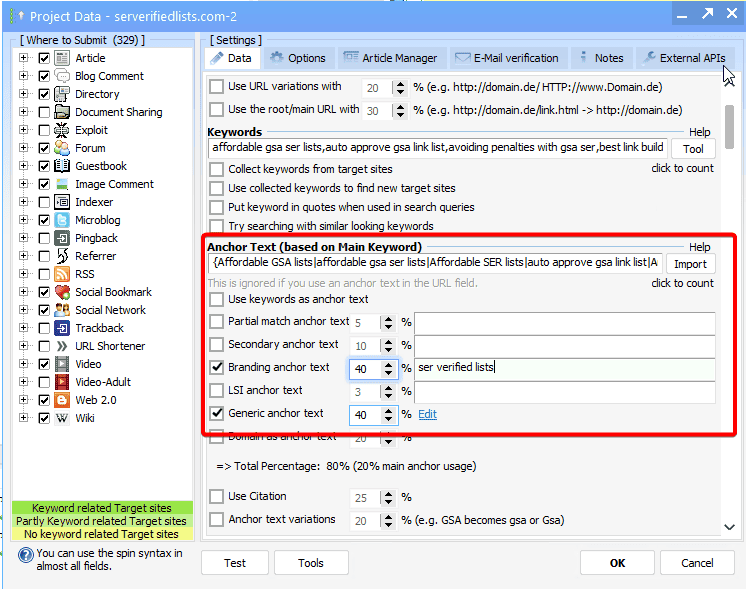
To turn theory into results, the technical configuration of GSA Search Engine Ranker click here must be precise. For any project built around GSA SER tier 1 link building, the software’s behavior needs to be constrained and optimized. First, disable all platforms that would create a negative footprint. Stick to engines that produce do-follow links in moderation, and prune any site list that contains known link networks. Second, the anchor text strategy for Tier 2 should be a healthy mix of generic phrases (“click hereâ€, “learn moreâ€, “websiteâ€), raw URLs, and a small percentage of partial-match keywords. Exact-match anchors are reserved only for deep Tier 3 or abandoned entirely to avoid over-optimization filters.
Third, integrate a content spinner or, better yet, a unique article generator with tiered spintax. Each Tier 2 link should feature a varied snippet of text surrounding the link, making the backlink profile appear organic. GSA SER’s ability to read from large spintax files allows for millions of combinations, which is essential when you are building tens of thousands of links. Finally, the use of a reliable captcha solving service and high-quality, private proxies cannot be overstated. When you are funneling link juice through a Tier 1 buffer, you cannot afford for the underlying IPs to be blacklisted, as that would taint the entire chain.
The Risk Mitigation Factor: Why the Buffer Strategy Works
The modern search landscape is unforgiving to sites caught manipulating link signals. Manual penalties and algorithmic devaluations like Penguin have made raw, direct automated link building a high-stakes gamble. The elegance of the GSA SER tier 1 link building model lies in its built-in deniability and risk distribution. If a Tier 2 link network gets deindexed, only the Tier 1 buffer page loses some power; your money site remains untouched. If a Tier 1 page itself is penalized, you can simply disavow that single property or let it drop without impacting the rest. This compartmentalization allows for aggressive testing and scaling that would be suicidal with direct links.
Moreover, this layered approach mimics the kind of organic link graph that naturally popular content generates. Great content gets shared on social media, picked up by tiny blogs, aggregated by curators, and linked from wildly inappropriate places. Google does not penalize the authority site for bad links pointing at it; it simply ignores them. By emulating this pattern—a pristine money site, a handful of excellent Tier 1 articles, and a vast, noisy Tier 2 and Tier 3 generated by GSA—you reproduce the randomness of the web. The manual Tier 1 links provide the editorial relevance, while the automated tiers provide the volume signal that the page is being discussed widely.
Measuring Success: Metrics That Matter
Tracking a GSA SER tier 1 campaign requires a focus on the right indicators. Raw link count at the money site level is not the goal; it is the improved organic traffic and keyword rankings. Use tools to monitor the indexation rate of your Tier 1 properties—if only 30% of them are indexed, you are wasting resources. GSA SER’s built-in link verifier is crucial for checking which Tier 2 links actually stuck. A successful GSA SER tier 1 link building effort will show a steady increase in the referring domains of your Tier 1 pages, and a corresponding increase in the authority of those pages as measured by tools like Ahrefs or Moz.
It is also vital to watch for over-optimization warnings. If the number of exact-match anchors pointing to a Tier 1 page rises too quickly, you can dial back the Tier 2 anchor ratio within GSA. This feedback loop is where the expertise comes in. You are not setting and forgetting; you are nurturing a link ecosystem. The most sophisticated practitioners build “link wheels†or pyramids where multiple Tier 1 properties interlink with each other in a controlled manner before receiving GSA boosts, further consolidating authority. These structures, when built patiently and with attention to content quality, can dramatically lift difficult keywords for competitive niches.
In the end, tiered link building with GSA SER is not an outdated tactic; it is a matured, nuanced discipline. When people refer to GSA SER tier 1 link building, they are describing a sophisticated separation of power and risk. The Tier 1 remains handcrafted excellence, while GSA acts as the tireless engine that amplifies reach without endangering the core. For those willing to master the configuration and maintain editorial integrity at the top level, this methodology remains one of the most potent ways to sculpt a link profile that search engines will reward.